

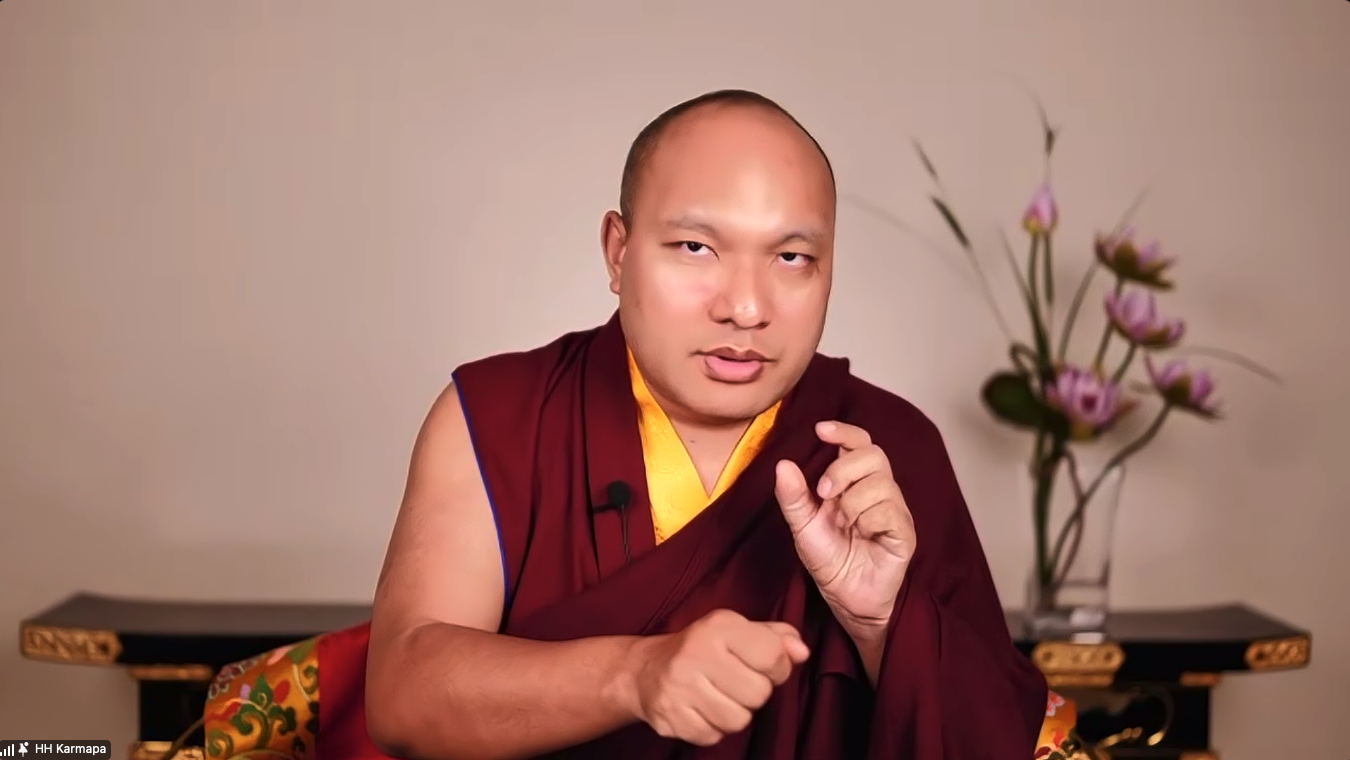
Origins of Secret Mantra • Day Ten
September 17th, 2025.
Classification of the Councils
To recap the first two councils:
- First Council, held at Rājagṛha (Rajgir), “Council of the 500”, led by Mahākāśyapa
- Second council, at Vaiśālī, “Council of the 700”, convened by the elder Yaśa and others
These two councils are the most important ones in Indian Buddhist history because it is there that the foundational form of the three piṭakas was established. The four Āgamas [Nikāyas] of Sūtra, Vinaya [and some portions of Abhidharma] were collected and systematically organised, thereby preserving texts priceless as a wish-fulfilling jewel for those seeking the path to liberation.
Ancient Indian, Chinese and Sri Lankan texts record several other councils that followed in India. However, they differ in one important respect: these later councils are recorded only within each school’s own corpus and lack independent manuscript support from multiple sources.
We can group the Buddhist councils which took place in India into three basic categories:
- Great councils.
The First (Rājagṛha) Council and the Second (Vaiśālī) Council are regarded as great councils because they represent the Buddha and the entire saṅgha, owing to the fact that the three piṭakas compiled at these gatherings are recognized as authoritative by all Buddhist schools. Likewise, the make-up of the assembly reflects all factions of Buddhism.
- Medium-sized councils.
These may also be called sectarian (of the eighteen schools or sects)—where individual schools compiled their own scriptures. As such, they represent only their own tradition, and not others. The example is the Sarvāstivāda council held in Kashmir during the reign of Kaniṣka where they compiled primarily the Sarvāstivāda scriptures. It was not a compilation of scriptures accepted by all other schools. Through such sectarian councils, each school’s texts were emerging as somewhat disparate.
For that reason, for example, the sources of the Four Āgama collection among the scriptures extant in Chinese all come from individual schools. Further, each school compiled its own Sūtras, Vinaya and Abhidharma, filling in the texts, accepting some portions while excising others. This process of standardising their own corpus resulted in significant differences between the three piṭakas of the schools.
Minor Councils:
These were councils held by groups of people who upheld the Sūtras, Vinaya or Abhidharma, in order to compile the three piṭakas and to comment on them, as well as on other related works. These groups were much smaller, thus not representing entire schools but rather just a few sangha communities or even a single monastery. If not only was a council held but the resulting scriptures were also disseminated, they can be considered “minor councils”.
After the first two great councils were held, no other great council took place in India, though several medium and minor ones did. Among these, the councils we need to pay special attention to are the three sectarian (medium) councils. In particular, there is strong evidence for the two councils held during the reigns of Aśoka and Kaniṣka. Even if we cannot prove with absolute certainty, there remains a credible basis for accepting their occurrence.
The Third Council
The Vātsīputrīya Council
Vātsīputrīya is a Foundation Vehicle school which appeared, not at the time of the original split, but in a later phase, during the formation of the sub-schools. Tang Xuanzang’s student Kuījī records a story about the origin of the name of the Vātsīputrīya school in his commentary on Vasumitra’s The Wheel Distinguishing the Scriptural Traditions (titled Notes on Treatise on the Scriptures of Different Schools):
The legend says there was once a ṛṣi (ancient seer) who, overcome by intense, unbearable desire, had sexual relations with a cow. From this union a child was born, giving rise to a lineage known as the Vātsīputra—“the child of a sexual union that should not be”.
Though the tale is rather fantastic and absurd—the father a sage and the mother a cow—the story explains this is how the legendary people “of what should not be” came into being. This school is said to be connected with them.
According to the Tibetan translation of Ācārya Bhavya’s (possibly Bhāvaviveka) Explaining the Differences Between the Schools (Skt. Nikāyabhedavibhaṅgavyākhyāna which is a section in the Blazing Intellect, Skt. Tarkajvālā), there was a Third Council held by the Saṃmitīya school. It says that, beginning 137 years after the Mahāparinirvāṇa, at the time of the Nanda dynasty, a great controversy arose in the saṅgha and lasted 63 years, until the reign of King Mahāpadma [likely the Nanda dynasty i.e. Mahāpadma and his sons, or, according to some, his father Mahānandin of the Śiśunāga dynasty]. Elder Vātsīputra convened the bhikṣus and held a council to resolve the dispute.
Yin Shun, a well-known scholar of republican era China, writes in his Formation of the Early Buddhist Canon, that the Saṃmitīya were a branch of the Vātsīputrīya, therefore this account can be regarded as describing an event in the Vātsīputrīya school. However, the sub-schools of the Saṃmitīya had not yet split at that time, so the Vātsīputrīya had not yet developed as a distinct school. If this account is true, the elder Vātsīputra mentioned above is a predecessor of the Vātsīputrīya school.
The Council of Pāṭaliputra
According to the documents of the Northern transmission, during the reign of King Aśoka, in the city of Pāṭaliputra (in Tibetan, sometimes called Marbu Chen), a controversy arose in the saṅgha due to the bhikṣu Mahādeva teaching the five views, which stirred much conflict at that time. Mahādeva enjoyed the support of King Aśoka, but the 500 bhikṣus (or elders/arhats according to some) who objected to him were exiled. After they arrived in Kashmir, King Aśoka regretted his decision and sent someone to ask them to return, but they refused. In order to resolve the dispute and pacify the conflict, another council was held to compile the three piṭakas.
As this event occurred during the reign of Aśoka, it would have taken place 110 years after the Mahāparinirvāṇa according to the Chinese tradition. According to the Southern transmission, it occurred 228 years after the Mahāparinirvāṇa.
At that time, according to the Dīpavaṃsa and Mahāvaṃsa, around 100 years after the Mahāparinirvāṇa, the Second Council was held under the sponsorship of King Kālāśoka (Black Aśoka, not the famed Dharma King Aśoka). Some 236 years after the Mahāparinirvāṇa, a fraudulent bhikṣu disrupted the teachings and caused a dispute. With the support of King Aśoka, 1,000 bhikṣus led by Moggaliputta-tissa gathered in Pāṭaliputra to hold a Third Council. According to the Southern transmission, this council lasted nine months. During the council, Moggaliputta-tissa wrote the Kathāvatthu (Points of Controversy) which refuted the wrong views of that period.
However, since the Kathāvatthu contains refutations of the views of many of the sub-schools that spread later, researchers assert that it was probably not written during the time of Aśoka but rather some hundred years later, around the end of the 2nd century BCE. Vasumitra’s Wheel Distinguishing the Different Scriptural Traditions (Skt. Samayabhedoparacanacakra) of the Northern tradition, however, states that this occurred one hundred years after the Mahāparinirvāṇa, making it difficult to reconcile the existence of the Third Council at that time. The account of the Third Council taking place during Aśoka’s reign comes only from Sri Lankan sources and is not described in the texts of other schools. Thus, if the Third Council did occur then, it was perhaps only a council for the Sthaviravāda school.
Records of the Tibetan Tradition
According to Tibetan scriptures there were primarily three:
- Vātsīputrīya
- Jalandhara
- Differing accounts of a third council
According to a text from the Tengyur, Paṇḍita Daśabala-Śrīmitra’s Ascertaining the Composite and Noncomposite (Skt. Saṃskṛtāsaṃskṛtaviniścaya; Tib. འདུས་བྱས་དང་འདུས་མ་བྱས་རྣམ་པར་ངེས་པ།):
- “100 years after the Tathāgata passed into Mahāparinirvāṇa, seven hundred bhikṣus who were free of desire compiled the dharma.” (probably Vaiśālī Council)
- “Also 400 years after the Tathāgata passed into Mahāparinirvāṇa, the sangha of ascetics departed from the sangha, so the elder Vātsīputra gathered those in his own school. From then on, the school was called the Dharma Teacher Vātsīputrīya.” (Vātsīputrīya Council)
- “Also, 700 years after the Tathāgata passed into Mahāparinirvāṇa, the elder Bahuśruta compiled the scriptures of the Saṃmitīya. From then on, the school was called the Saṃmitīya.”
- “Also, 800 years after the Tathāgata passed into Mahāparinirvāṇa, the elders Bhutika and Buddhamitra compiled the scriptures of that school. This is called the five times of the compilation of the Saṃmitīya dharma.”
Examining the wording itself, there seem to have been multiple Saṃmitīya councils.
According to Butön Rinpoche
Butön Rinpoche notes in his History of Dharma (Tib. བུ་སྟོན་ཆོས་འབྱུང་།) that the first two councils are mentioned in the Vinaya scriptures, but the Third Council is not, which has led to various disagreements. He presents three different accounts of a “Third Council” that occurred.
First, he mentions the Vātsīputrīya Council:
Some say that 137 years after the Buddha’s Mahāparinirvāṇa, there were kings named Nanda and Mahāpadma. At that time, an emanation of a wicked Māra named Bhadra [lit. “The Good One”] appeared in the form of a bhikṣu and displayed various miracles. He divided the saṅgha and disrupted the teachings. During the era of the elders Nāgasena and others, the schools split, and 63 years later the elder Vātsīputra held the council and compiled the teachings.
Then he describes the Jalandhara Council:
Some say that 136 years after the Buddha’s Mahāparinirvāṇa, during the reign of King Aśoka in the City of Blooming Flowers [likely Pāṭaliputra], the arhats recited the teachings in Sanskrit and other colloquial languages such as Apabhramśa and Paiśāci. As a result of reciting in many vernaculars, the students split into groups, giving rise to the eighteen schools.
They developed differences in their practices and philosophy, which disrupted the teachings. Therefore, 300 years after the Mahāparinirvāṇa, arhats and scholars gathered at the Jalandhara Monastery, near modern-day Dharamsala, held a council and compiled the Dharma.
But Butön Rinpoche says this cannot be reconciled with the prophesy spoken by the Buddha in the Avataṃsaka Sūtra: “100 years after I pass away, king Aśoka of the Maurya line will appear, a child of the city of Pāṭaliputra. One day there will be 84000 stupas with my relics.”
Further, in the Śākyaprabha’s Illuminating Commentary of the Verses for Novices of the Noble Mūlasarvāstivādins (Skt. Āryamūlasarvāstivādiśrāmaṇerakārikā-vṛttiprabhāvatī) it is said that after King Aśoka died, the arhats, due to their attachment to reciting the words in their vernacular languages, gradually began to write sūtras in those languages. As a result, the teachings split into eighteen schools.
Then, Rinpoche mentions reports of a council in Jalandhara 300 years after the Mahāparinirvāṇa. Following this, he describes the council that occurred during the reign of Kaniṣka (to be explained with the Fourth Council).
Tāranātha says in his History of Buddhism in India (Tib. རྒྱ་གར་ཆོས་འབྱུང་།) that there is a reported account of a Third Council during the reign of King Mahāpadma.
Sakya Pandita’s Explanation and Commentaries
Another way of describing it appears in Sakya Pandita’s Examining the Three Vows (Tib. སྡོམ་གསུམ་རབ་དབྱེ།):
A bhikṣu named Mahādeva
and his wrong dharma
Were refuted by the arhats,
So the Third Council was held, I’ve heard.
He says that the Third Council was held in order to refute the wrong dharma of the bhikṣu Mahādeva, adding “I’ve heard”.
The commentaries on this work by Lhatsun Samyepa, Pökhangpa Jamyang Rinchen Gyaltsen, Lechen Shönnu and Gadongpa are known as the four authoritative commentaries. In his commentary, Lhatsun Samyepa says that this account (on the council being held to refute the wrong views of Mahādeva) was heard from the oral teachings of Indian masters, but was not recorded in the scriptures.
Śākya Chokden wrote his commentary on Sakya Pandita’s Explaining the Three Vows called the Golden Scalpel, an Excellent Discourse (Tib. ལེགས་བཤད་གསེར་གྱི་ཐུར་མ།). In this commentary, he also refers to the above mentioned Śākyaprabha’s Illuminating Commentary which states that this council was held to establish the texts of the 18 schools, after the Second Council. In addition, he cites Bhāvaviveka’s Blazing Intellect (Skt. Tarkajvālā) which places this council 200 years after the Mahāparinirvāṇa, held by the elder Vātsīputra. So, this Vātsīputrīya council should be understood as the Third Council and the reason is, he says, that the Second Council was held 110 years after the Mahāparinirvāṇa.
Sakya Pandita says in his Explaining the Three Vows that the Third Council was held to dispel the wrong dharma of Mahādeva. The reason he gives is that the dharmas of Mahādeva had left stains on the 18 schools even though they had been disproven. Therefore, in order to prove that the 18 schools are all the true teachings of the Buddha, they held the Third Council.
The Fourth Council
- Background and Circumstances of the Council
- Process and Participants of the Council
- Content and Results of the Council
- Preservation and Transmission of Results
- Historical Analysis and Conclusion
- Background and Circumstances of the Council
The Fourth Council—described by Tibetans as the Third Council, but by Xuanzang and most contemporary researchers as the Fourth—took place around 400 years after the Buddha’s Mahāparinirvāṇa. Some accounts place it 500 or even 600 years later but some four hundred years later is more widely accepted. It is commonly accepted that the Third Council was held during the reign of King Aśoka, and the Fourth Council during the reign of King Kaniṣka.
In the Tibetan and Chinese translations of the Chapter on Medicine (སྨན་གྱི་གཞི།) from the Mūlasarvāstivāda Vinaya, when the Teacher was in Kuśinagar—also known as “Military City”—he subdued the yakṣinī Dungchenma, who had been devouring people. At that time, Vajrapāṇi, his guardian, was also present. They saw some children building small stupas out of dust and the Buddha made a prophecy:
“Vajrapāṇi, my guardian, do you see the little children building sand stupas?”
“Venerable one, I do.”
“Vajrapāṇi, four hundred years after my Mahāparinirvāṇa, a king of the Kuṣāṇa clan named Kaniṣka will arise here. He will build a great stupa in this very place, which will come to be known as the Kaniṣka Stupa. After my passing into Mahāparinirvāṇa, it will perform the activity of a Buddha.”
Thus, Kaniṣka was prophesied to appear 400 years after the Buddha.
In any case, around 400 years after the Mahāparinirvāṇa, there appeared a King Kaniṣka of the Kuṣāṇa dynasty. At that time the Sarvāstivāda school was the mainstream Buddhism in northwestern India, with Kashmir serving as the stronghold of the Eastern Sarvāstivāda masters. King Kaniṣka himself was a devout Buddhist and the main patron of the Sarvāstivāda school.
The immediate cause of the council stemmed from King Kaniṣka’s own doubts and suspicions regarding the complexities of the Buddhist doctrines, as there was widespread disagreement about the teachings. It is said that the king invited a senior monk to the palace each day to expound the Dharma, while the King himself carefully read and examined the scriptures. In doing so, he discovered numerous discrepancies, that various teachers taught disparate philosophies, and that the doctrines of the different schools frequently contradicted one another.
Each claimed to be right and the others wrong. Disputing out of their own attachments, there was no way to reach consensus.
Such circumstances deeply troubled the king. Faced with such divergent theories, he saw that it had become nearly impossible to distinguish right from wrong and that scholars were losing a reliable foundation. Fearing that the true Dharma would perish, he turned for guidance to the venerable Elder Pārśva, renowned for his many qualities, and expressed his wish to unify the schools’ doctrines and clarify the correct principles.
Elder Pārśva was an “old aspirant” (Tib ་རྒན་ཞུགས་), which means that he had become a monk late in life (at the age of eighty, according to Xuanzang’s Great Records of Travels to the Western Regions). Nonetheless, he practiced with great diligence, so much so that it was said that “for three years his ribs never touched his seat”. That is why he got that name—because his ribs (pārṣva) or side never touched his seat i.e. he never lay down. He meditated on dhyāna in that way. He became very well-versed in both scriptures and treatises and attained arhatship. Like King Kaniṣka, he too was deeply troubled by the diverging interpretations of the true Dharma at that time.
Since the days of Madhyāntika, who had first propagated the teachings in Kashmir, the region had long been a bastion of the Sthaviravāda (or Sarvāstivāda as one of its branches) school. Thus, Elder Pārśva and King Kaniṣka together initiated the great council, with the aim of clarifying and consolidating the Sarvāstivāda teachings.
A number of modern scholars take a contrasting stance, maintaining that Kaniṣka was actually interested in Mahāyāna, and thought if the Foundation vehicle were unified, they would have rivaled the Mahayana. Thus, he had to hold the council. (The Karmapa explained that this would become clear later.)
II. Process and Participants of the Council
With King Kaniṣka’s patronage, a great assembly of bhikṣus was convened in Kashmir (at Kuṇḍalavana Saṅghārāma in Kashmir, or, as some sources have it, in Gandhāra), bringing together most eminent masters not only deeply versed in the Tripiṭaka but also trained in the five sciences [grammar, logic, medicine, arts and inner science]. In the Northern transmission, the core body of participants was recorded as “five hundred arhats” (sometimes recorded as 499). Elder Pārśva was among the chief initiators and organizers of the council. The assembly unanimously chose Elder Vasumitra as the presiding elder, and together with Pārśva, he co-hosted the proceedings. They served as decisive authorities in settling difficult questions as “all doubts and disputes were decided by them”. Other notable participants included Dharmatrāta (to whom the Tibetan tradition attributes The Collection of Utterances, (Skt. Udānavarga), Ghoṣa, Buddhadeva and several other revered masters.
Regarding the participants, the records vary across sources:
- The Life of Vasubandhu [a Chinese text compiled by Paramārtha, preserved in the Chinese Tripiṭaka] states that Bhikṣu Kātyāyanīputra of the Sarvāstivāda school assembled five hundred arhats and five hundred bodhisattvas.
- Tibetan tradition records five hundred arhats, five hundred bodhisattvas and five hundred ordinary paṇḍitas, totalling fifteen hundred participants.
On this matter, Butön Rinpoche notes in his History of Dharma:
Some say that the purpose was to eliminate doubts regarding whether the teachings of the eighteen sects were truly the words of the Buddha. Thus 300 years after the Teacher’s nirvāṇa, at a monastery in a place called Kunpana [probably Kuṇḍalavana] in Kashmir and sponsored by King Kaniṣka of Jalandhara, 500 arhats including Purṇi, 500 bodhisattvas including Vasumitra and 250 or 160000 [or 60000 or 61000] ordinary individuals [who were] paṇḍitas recited and verified the texts, proving that all eighteen are the Buddha’s words.
Tāranātha writes in his History of Buddhism in India:
According to the Tibetans, this council took place in an assembly of five hundred arhats, five hundred bodhisattvas and five hundred common (Skt. pṛthagjana) paṇḍitas. Although this does not go against the Mahāyāna tradition, at that time the great Buddhist scholars were called mahābhaṭṭārakas (great venerable ones) rather than paṇḍitas. So, the use of the word paṇḍita with five hundred is not exactly correct.
Tāranātha also mentions a stray page containing the later portion of an Indian work on the succession of the hierarchs, translated by Gö Shönnu Pal. In this also are mentioned four hundred bhaṭṭārakas like Vasumitra and others. However, it would be wrong to identify this Vasumitra with the great Vaibhāṣika ācārya Vasumitra. Further, since these relate to the dharma of the Foundation Vehicle, it is desirable to follow the Foundation Vehicle tradition here. It is said (in the Foundation Vehicle tradition) that five hundred arhats and five thousand mahābhaṭṭārakas took part in this council. Five hundred arhats are mentioned here in order to glorify the teachings. As a matter of fact, the number of arhats was smaller. The number could have been five hundred including all the āryas i.e. those who had attained the stream entry and other levels of the fruits of the noble path. The Tibetan account of five hundred arhats, five hundred bodhisattvas and five hundred ordinary paṇḍitas is likely an exaggeration. There were most likely five hundred bhikṣus with just a few noble individuals [āryas].
III. Content and Results of the Council
Regarding the specific content of this council, the various records show some core disagreements:
- Northern transmission mainstream records (e.g. Tang Xuanzang’s Great Records of Travel to the Western Regions) clearly indicate that the core achievement of the council was to compile authoritative commentaries (śāstras) on the tripiṭaka, rather than to re-compile the sūtras and vinaya themselves. According to these sources, the five hundred sages jointly composed treatises:
- First, they composed the Upadeśa treatise of 100,000 verses, explaining the Sūtrapiṭaka
- Next, they composed the Vinaya Vibhāṣā treatise of 100,000 verses, explaining the Vinayapiṭaka
- Finally, they composed the Abhidharma Vibhāṣā treatise of 100,000 verses, explaining the Abhidharmapiṭaka.
Together, these three commentaries comprised 300,000 verses—approximately 9.6 million words—systematically expounding Sarvāstivāda doctrine. “They completely explained the tripiṭaka for all ages… great principles re-illuminated, subtle teachings revealed again.”
- Records in the Life of Vasubandhu read:
One hundred years after this there will be an arhat Kātyāyana who will go to the region of Kashmir and gather 500 arhats and they will compile the Abhidharma and after that they will compile the extensive commentary Great Exposition. At that time a master called Aśvaghoṣa will then transcribe it and it will have 1 million verses.
Note: It remains uncertain whether this Aśvaghoṣa is the same Aśvaghoṣa commonly known as the student of Āryadeva. In any case, there exists a letter exchanged between King Kaniṣka and Aśvaghoṣa. Further investigation into this matter would be veery beneficial.
- Tibetan transmission records claim this council re-compiled and recorded all three piṭakas (Sūtra, Vinaya, Abhidharma), not just creating commentaries. They also state the council recognised the doctrines of all eighteen schools of Buddhism as the true teachings.
IV. Preservation and Transmission of Results
King Kaniṣka greatly treasured the council’s outcomes. He ordered the treatises to be engraved on copper plates, then sealed in stone containers and stored within a stūpa, with guards assigned to protect them. Students were allowed to enter the stūpa to read the texts but were strictly forbidden from taking them out. This was a very strict prohibition intended to prevent loss or alteration. It was said that reading through the copper texts would take twelve years.
Unfortunately, most of these monumental works were lost or destroyed over time. The Upadeśa treatise and the Vinaya Vibhāṣā treatise disappeared long ago. Only the Abhidharma Mahāvibhāṣā—comprising 200 volumes and translated into Chinese by Xuanzang—has survived relatively intact, becoming the comprehensive foundation for the study of Sarvāstivāda philosophical thought.
For this reason, the Chinese master Chopak (Fazong) translated it into Tibetan. He offered these to the Dalai Lama, and over time they were gradually re-printed. Most of the work is complete, though some portions are missing. It has been published in book form by a Tibetan publisher of old texts and is also available online through the Adarsha website www.adarshah.org. There, students can find works such as the Great Exposition and the Establishment of Wisdom (Skt. Jñānaprasthāna, likewise translated by Master Chopak), the texts of great importance.
V. Historical Analysis and Conclusion
1. Nature and Scope
Modern scholars tend to accept the Northern transmission records, namely that this Fourth Council (but according to Tibetan tradition 3rd) was essentially a sectarian council initiated by the Sarvāstivāda school. Its primary purpose was to produce authoritative commentaries on the three piṭakas that would unify and standardise the school’s doctrine, rather than to comprehensively recite or review the sūtras and vinaya as was done in the first three councils.
The Tibetan transmission’s account—of comprehensively compiling the three piṭakas and recognising eighteen schools—is likely a later interpolation, according to modern researchers, inconsistent with the historical evidence of King Kaniṣka’s devotion to the Sarvāstivāda and Kashmir being a Sarvāstivāda stronghold.
The account of large-scale Mahāyāna scholar participation, i.e. five hundred bodhisattvas, is also considered doubtful. Although Mahāyāna Buddhism existed at the time, it is unlikely that such a large group of Mahāyāna scholars would have been given the opportunity to take part in a council dominated by the Sarvāstivāda school.
2. Historical Significance
This council marked the systematisation and maturation of the Sarvāstivāda body of scriptures, with the Great Exposition becoming its core text. It may also have initiated the comprehensive practice of recording in writing the Buddhist scriptures, which had previously been transmitted primarily through the oral tradition. From this point onward, written records became a more stable and primary method of preserving the teachings.
This reflects a general phenomenon during the sectarian period of Indian Buddhism, when major schools held their own councils to preserve the purity and authority of their doctrines. The extant forms of the Indian Buddhist Tripiṭaka primarily come from each school’s individual compilation and transmission, and do not remain in their single, original form. It is therefore difficult to claim that they fully preserved the original texts. Over time, these texts continued to evolve as they spread. Similarly, each major school developed its own transmission of the three piṭakas, so it can be said that each school held at least one council of its own.
The three baskets we have today are a result of the sectarian councils. So, it is difficult to determine their actual, original form.
It is quite interesting how people in the past had exceptional memories. These days we often retain very little information since we rely too much on our technological devices—sometimes we can’t even remember our own telephone numbers. Older people, however, often recall many events from back in the day, as if their memories are deeply inscribed in their brains. In particular, some arhats were said to possess a dhāraṇī [retention] of remembrance, allowing them to recall teachings perfectly, like a tape recorder playing back without a single mistake.
This is not impossible. There were many people who could recite the stories of King Gesar, even though most of them were completely illiterate. For some reason, they would sometimes see an apparition of Gesar of Ling in a dream, and afterward, through the blessings of their guru, they could recite the stories of King Gesar perfectly and fluently, as if they had always known them.
It is an amazing thing, the Karmapa said. This is not something we say out of superstition. It really happens. This phenomenon has been studied and researched, and these accounts have been confirmed by investigation.
This was the conclusion of the fourth year of the Mark Ngok Summer Teachings on the Origins of Secret Mantra.
The Karmapa then announced the upcoming anniversary of Mikyö Dorje’s parinirvāṇa. While this occasion is already observed in Tibet, it is also favourable if the saṅgha observes it both in Tibet and abroad, on the 3rd day of the 8th month according to the Tsurphu tradition. His Holiness invited everyone to gather and recite the songs, a basic form of The Rain of Wisdom, including a selection of songs by Mikyö Dorje and other Kagyu masters. There will also be a teaching highlighting Mikyö Dorje’s life and deeds.